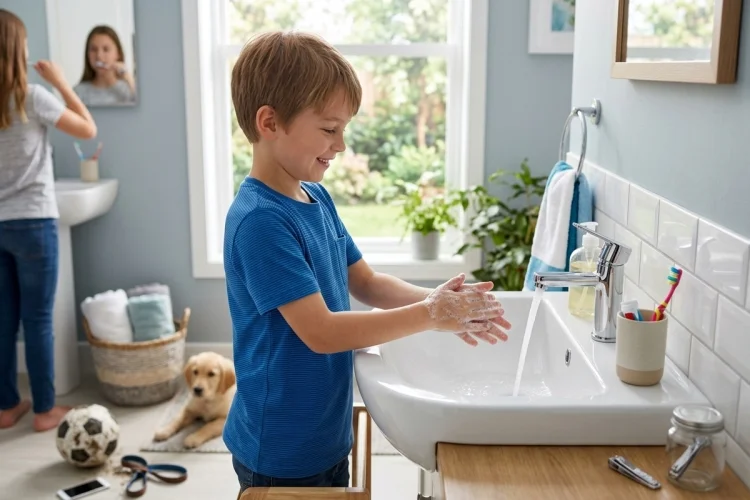
Think about everything your hands touch in one day: door handles, phones, pencils, pets, food, and perhaps a muddy football. Even when your hands look clean, they may carry germs that can spread to your eyes, nose, mouth, or other people.
Personal hygiene is the collection of everyday habits we use to keep our bodies clean and healthy. It includes washing our hands, bathing, brushing our teeth, wearing fresh clothes, caring for our hair, trimming our nails, and covering coughs and sneezes.
So, why is personal hygiene important? Good hygiene lowers the chance of spreading some infections, protects the teeth and skin, manages body odour, and helps us feel comfortable around others.
The World Health Organization reports that effective community hand hygiene can reduce diarrhoeal illness and acute respiratory infections, showing how one simple habit can make a meaningful difference.
Personal hygiene does not mean trying to remove every germ or constantly worrying about dirt. It means following sensible routines that match your age, body, activities, and health needs.
What Does Personal Hygiene Include?
Personal hygiene covers several areas of body care. Handwashing is one of the most important, but it is not the only one.
A basic hygiene routine may include cleaning the body, brushing and cleaning between the teeth, washing the hair when needed, wearing clean underwear and socks, and keeping nails reasonably short and clean.
It also involves changing sweaty clothes and looking after small cuts properly. These habits help remove sweat, dirt, food particles, excess oil, dead skin, and some harmful microorganisms.
They also allow you to notice changes such as a rash, sore tooth, unusual smell, or irritated scalp before the problem becomes more uncomfortable.
The ideal routine is not identical for everyone. Climate, age, physical activity, skin sensitivity, hair type, puberty, cultural practices, and medical conditions can all affect how personal care should be managed.
Clean Hands Help Stop Germs from Spreading
Hands can move germs from surfaces to food, faces, and other people. Touching the eyes, nose, or mouth with unwashed hands gives some germs an opportunity to enter the body.
The CDC says handwashing with soap and running water can help prevent the spread of respiratory and diarrhoeal infections.
Important times include before preparing or eating food, after using the toilet, after coughing or sneezing, after touching animals, and whenever hands are visibly dirty.
Good handwashing involves more than quickly placing your fingers under a tap. Wet your hands, apply soap, and rub the palms, backs, spaces between the fingers, thumbs, fingertips, and areas under the nails.
Scrub for at least 20 seconds, rinse well, and dry with a clean towel or air dryer. When soap and water are unavailable, the CDC recommends a hand sanitiser containing at least 60% alcohol, although washing remains the better option in most situations.
Oral Hygiene Protects Teeth and Gums
Teeth may be strong, but they still need daily care. Food particles and bacteria can contribute to plaque, tooth decay, gum inflammation, and unpleasant breath.
The American Dental Association recommends brushing twice a day for two minutes with fluoride toothpaste. It also advises cleaning between the teeth daily because a toothbrush cannot easily reach every narrow space.
Brushing harder is not necessarily better. Use gentle, small movements and clean the front, back, and chewing surfaces of each tooth. Children may need adult supervision until they can brush every area reliably and use the correct amount of toothpaste.
Diet matters too. Frequently drinking sugary beverages or snacking on sugary foods gives mouth bacteria more opportunities to produce acids that affect tooth enamel.
Regular dental check-ups are also part of oral care. A dentist can identify problems that may not yet cause pain and provide advice suited to an individual’s teeth, gums, and age.
Bathing Removes Sweat, Dirt, and Odour
Skin produces oil and sweat throughout the day. Exercise, hot weather, puberty, and physical work can increase moisture and body odour.
Bathing helps remove sweat, dirt, excess oil, and substances collected from the environment. Areas such as the armpits, feet, groin, skin folds, and behind the ears may need particular attention.
However, not every child needs the same bathing schedule. The American Academy of Dermatology says children aged 6 to 11 may not require a daily bath unless they are dirty, sweaty, have body odour, or have been swimming.
Once puberty begins, daily bathing and washing after heavy sweating are generally recommended.
Use comfortably warm rather than extremely hot water, and choose a gentle cleanser when the skin is dry or sensitive. After washing, dry carefully-especially between the toes and inside skin folds, where moisture may remain.
Deodorant can help manage odour, while antiperspirant reduces sweating. These products support washing rather than replacing it.
Hair Care Should Match Your Hair Type
Hair hygiene is another area where one rule does not fit everyone. Some people develop an oily scalp quickly, while others have dry, curly, tightly coiled, or textured hair that needs less frequent shampooing.
The American Academy of Dermatology recommends washing hair according to how oily or dirty it becomes. It also advises applying shampoo mainly to the scalp, where oil, dead skin, and product buildup collect.
After shampooing, conditioner can add moisture and make hair easier to detangle. Wet hair can be delicate, so rough towel drying and aggressive brushing may cause damage.
Regular hair care also makes it easier to notice dandruff, irritation, head lice, sores, or unusual hair loss. Persistent itching or scalp problems should be discussed with a parent, caregiver, pharmacist, doctor, or dermatologist rather than hidden beneath more hair products.
Clean Clothes Are Part of Good Hygiene
Bathing has limited value when you immediately put on dirty or sweaty clothes. Fabric can hold moisture, skin oils, smells, and microorganisms.
Underwear and socks should generally be changed every day, as well as after swimming or heavy exercise. Sports clothes should be washed before being worn again whenever possible.
Dry feet carefully and avoid keeping damp socks or shoes on for long periods. The NHS recommends changing and washing clothes regularly as part of controlling body odour.
Towels, razors, toothbrushes, and other highly personal items should not normally be shared. Sharing them may transfer bacteria, fungi, blood, saliva, or skin conditions between people.
Keeping a small spare set of socks or a clean shirt in a sports bag can make hygiene much easier after a busy school day or physical activity.
Hygiene Supports Comfort and Confidence
Personal hygiene is mainly a health habit, but it also affects social comfort. Fresh breath, clean clothes, and a washed body can help someone feel more relaxed at school, work, or social events.
Poor hygiene may lead to noticeable odour, greasy hair, dirty nails, or stained clothing. Other people may respond negatively, even when the person is struggling because of limited facilities, illness, disability, depression, sensory difficulties, or family circumstances.
For this reason, hygiene should be discussed with kindness rather than shame. Teasing someone about smell or appearance rarely teaches a useful habit and may damage confidence.
It is better to offer practical support. A child might need a simple checklist, reminders, easier access to supplies, fragrance-free products, or help learning how to perform a task independently.
A sudden major change in hygiene can sometimes signal that a person is overwhelmed or unwell. Caring adults should respond with curiosity and support rather than immediate criticism.
A Simple Daily Personal Hygiene Routine
A good routine should be realistic enough to follow consistently. Complicated schedules often fail because they require too much time or too many products.
In the morning, brush your teeth, wash your face when needed, apply deodorant if appropriate, put on clean underwear and socks, and check that your hands and nails are clean.
During the day, wash your hands at important moments, cover coughs and sneezes with a tissue or your elbow, avoid sharing personal items, and change out of wet or heavily sweaty clothing.
In the evening, bathe or shower according to your needs, clean your teeth again, and prepare fresh clothes for the next day. Hair washing can be added on the days that suit your hair type and activity level.
Habit stacking can make the routine easier. For example, brush your teeth immediately after breakfast and before getting into bed. Place soap, toothpaste, a towel, and clean clothes where they are easy to see and use.
Can Someone Be Too Clean?
Hygiene is helpful, but excessive cleaning can create problems. Repeated scrubbing, very hot showers, harsh products, or frequent use of strong fragrances may irritate or dry the skin.
Using antibacterial products everywhere is also unnecessary for ordinary personal care. Plain soap and water are effective for routine handwashing, according to current WHO community guidance.
A routine should protect health without causing pain, cracked skin, anxiety, or constant fear of contamination.
Someone who feels compelled to wash repeatedly or cannot complete normal activities because of hygiene worries may need support from a healthcare professional.
Seek medical or dental advice when you notice persistent body odour, sudden excessive sweating, bleeding gums, tooth pain, recurring skin infections, a spreading rash, or another unexplained change.
Hygiene can prevent or manage some problems, but it cannot replace proper treatment.
Why is personal hygiene important? It helps reduce the spread of germs, protects the mouth and skin, controls sweat and odour, and supports comfort in everyday situations.
The most useful routines are simple: wash your hands properly, brush your teeth twice daily, bathe according to your age and activity, wear fresh clothing, and care for your hair and nails.
There is no need to use dozens of products or aim for impossible perfection. Choose one habit to improve today.
You could practise a full 20-second handwash, set a two-minute toothbrushing timer, or prepare clean clothes for tomorrow. Once that step becomes automatic, add another. Healthy hygiene is built through small actions repeated consistently.